
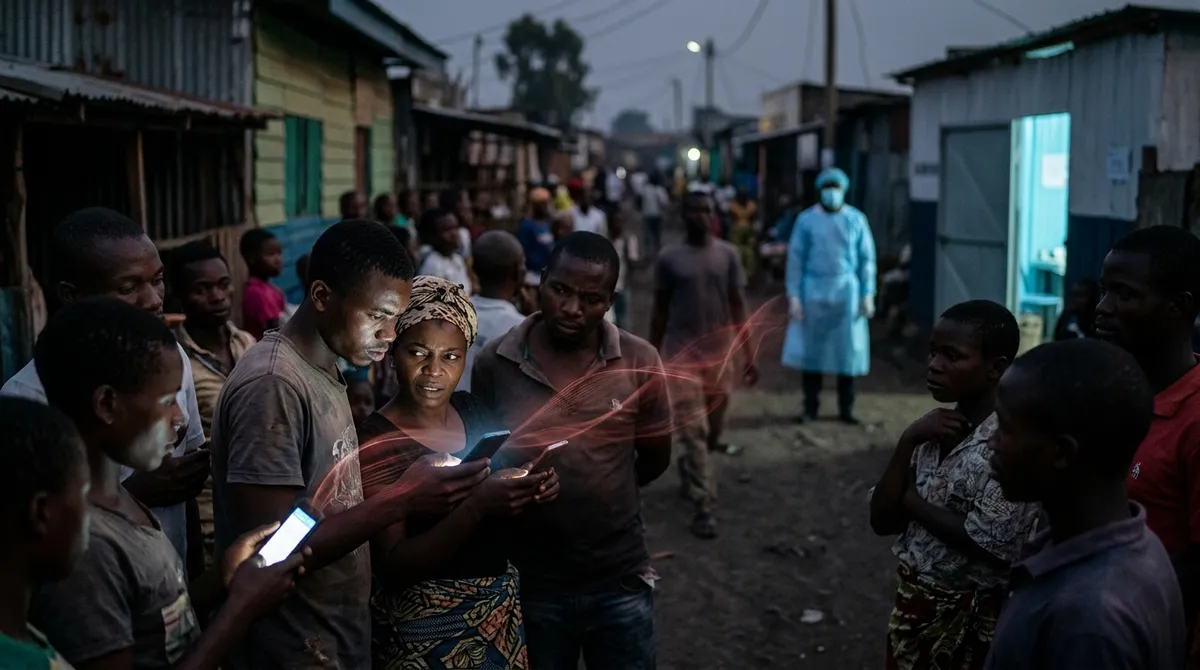
The Information War Behind the Health Crisis
As the Ebola outbreak in Congo intensifies, a parallel crisis is unfolding across social media platforms and local communities. According to reports, misinformation and false claims about the virus are spreading rapidly, creating a dangerous information environment that directly threatens containment efforts.
The Washington Post reports that these false narratives are not just background noise—they're actively undermining public health response efforts while fueling panic and distrust among affected populations. With an active, worsening outbreak on the ground, misinformation becomes a direct threat to containment efforts.
When False Claims Become Deadly Obstacles
The spread of conspiracy theories and false information about Ebola creates tangible barriers to effective outbreak response. According to reports, these misleading claims can discourage people from seeking treatment when symptoms appear, prevent communities from following essential safety protocols, and erode trust in health authorities who are working to contain the spread.
This phenomenon transforms misinformation from a mere annoyance into a public health emergency multiplier. When people avoid medical care or ignore quarantine guidelines based on false information, the virus gains additional pathways to spread through communities.
The Speed of Digital Deception
Reports indicate that misinformation spreads faster than the virus itself during public health emergencies. Social media platforms play a crucial role in amplifying health-related conspiracy theories, creating echo chambers where false claims can gain momentum and credibility through repetition rather than factual accuracy.
The digital landscape allows unverified claims to reach thousands of people within hours, often outpacing official health communications that must go through verification processes and institutional channels. This speed advantage gives conspiracy theories a head start in shaping public perception.
The Trust Deficit Factor
According to reports, communities' distrust of official health messaging plays a significant role in fueling false narratives about the outbreak. This skepticism doesn't emerge in a vacuum—it often reflects deeper issues with government credibility, historical medical exploitation, or inadequate communication from health authorities.
When official sources fail to connect with communities or address their specific concerns, people naturally turn to alternative explanations that may feel more relatable or emotionally satisfying, even when those alternatives lack factual basis.
Identifying Credible Information in Crisis
During active health emergencies, the ability to distinguish between reliable and unreliable information becomes a critical survival skill. Reports suggest that audiences need practical guidance on how to spot and report health misinformation in real time.
Credible sources typically provide specific details about their data collection methods, cite established medical institutions, and acknowledge uncertainties rather than making absolute claims. They also update information as new evidence emerges, rather than sticking to initial narratives regardless of changing circumstances.
The Broader Pattern of Health Misinformation
The Congo Ebola situation reflects a broader pattern of how conspiracy theories emerge during public health emergencies. Reports indicate that false claims about disease outbreaks follow predictable patterns, often focusing on the virus's origins, the effectiveness of treatments, or the motivations of health authorities.
These conspiracy theories tend to thrive in environments where official communication is inadequate, where communities have experienced past betrayals by authorities, or where the scientific complexity of the situation creates space for alternative explanations to take root.
The Real-World Impact
According to reports, the consequences of Ebola misinformation extend far beyond online debates. When false claims influence real-world behavior during an active outbreak, they can directly contribute to increased transmission rates, delayed treatment seeking, and reduced cooperation with public health measures.
This creates a feedback loop where misinformation makes the outbreak worse, which then generates more fear and uncertainty, which in turn makes communities more susceptible to additional false claims.
As the situation in Congo continues to develop, the battle against misinformation remains as critical as the fight against the virus itself. The challenge lies not just in providing accurate information, but in rebuilding the trust necessary for effective public health communication during times of crisis.